Overview
As part of my post-graduate UX program, I collaborated with a group of six to conduct an in-depth analysis of a popular company for my first project.
Choosing Instacart provided a valuable learning opportunity, as it combines virtual and in-person processes. Through researching competitors, deconstructing user pathways, and analyzing brand identity, we developed a comprehensive analysis using the five elements of UX. This analysis was then used to create a user persona and journey map.
This project expanded my knowledge of UX research and highlighted how each step of the user journey impacts the overall experience.


Deconstructing the User Experience Through Analyzing the Elements of UX
Team



Tools
Figma
Canva
Miro
My Role
Strategy Analyses
Scope Analyses
User Research
User Persona
Journey Map Content
The 5 Elements of UX
Strategy
Includes User Needs, Business Objectives, and goals of the product
The 5 Elements of UX
Scope
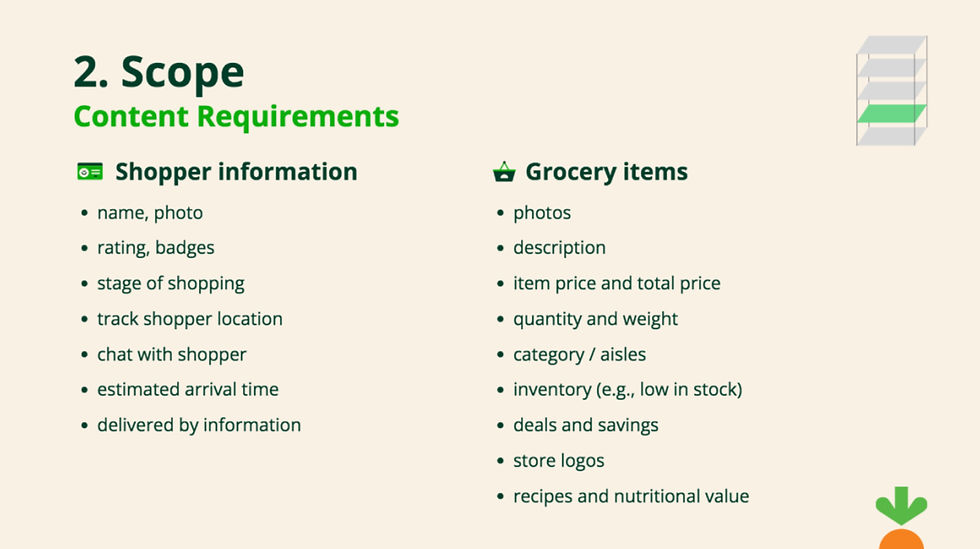
All feature and content requirements for the product
The 5 Elements of UX
Structure
How the features are organized and interact with one another
The 5 Elements of UX
Skeleton
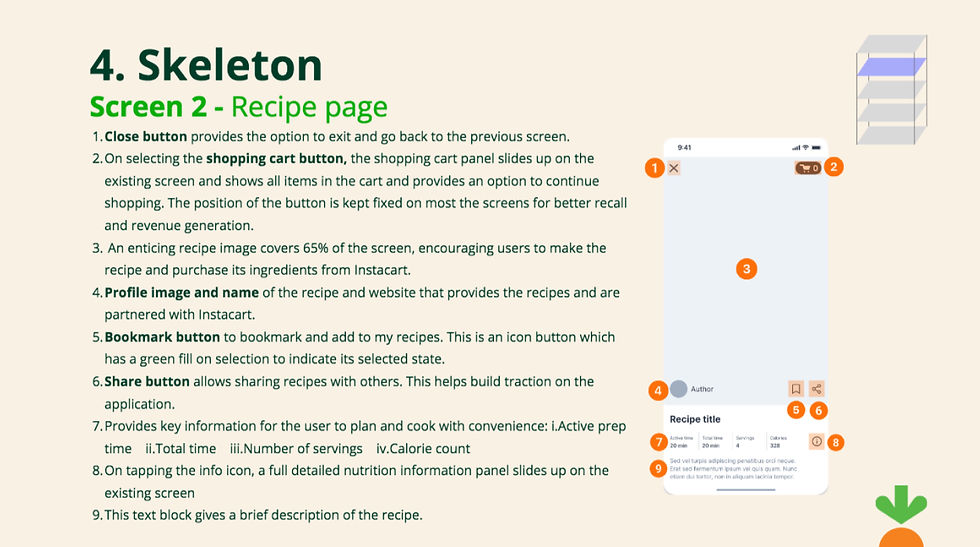
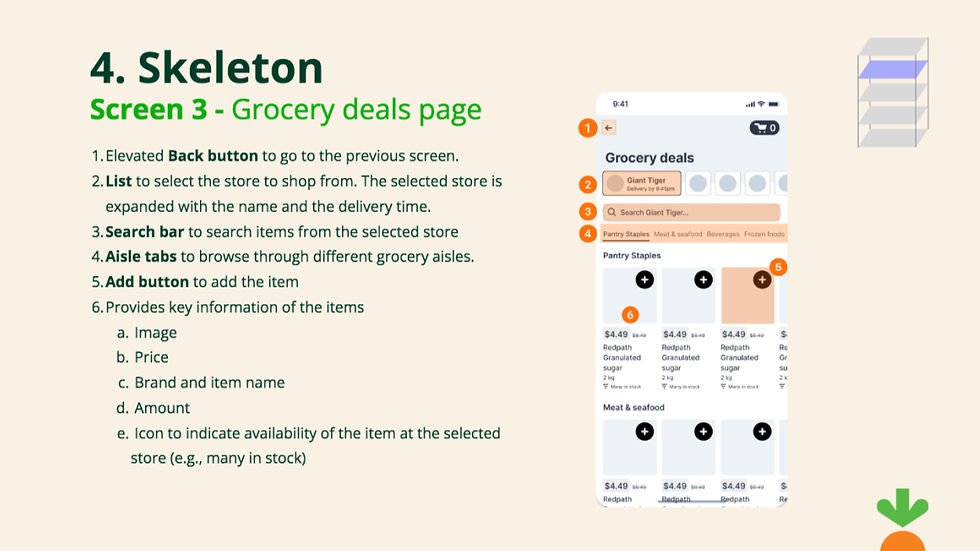
The interface and navigation design throughout the product
The 5 Elements of UX
Surface
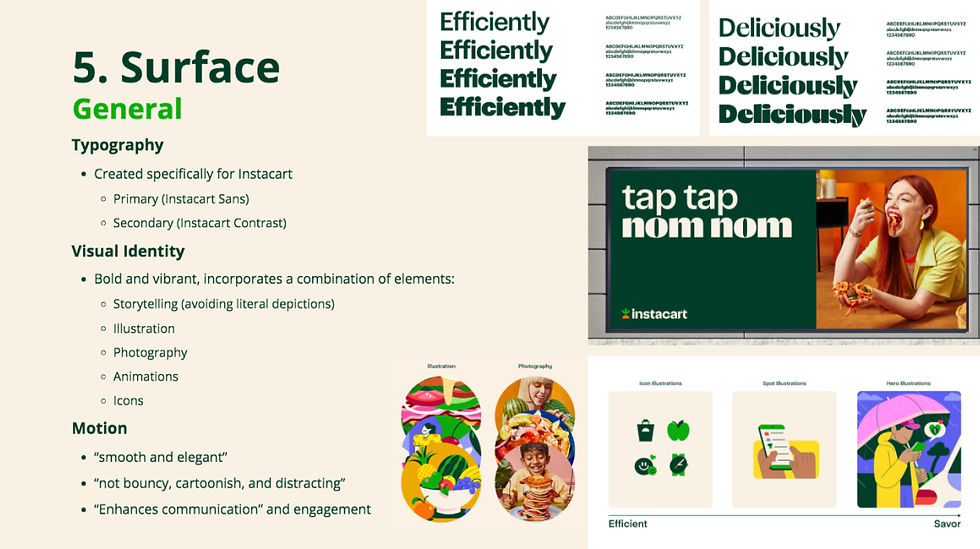
Style guide and visual design throughout the product
Using the knowledge gained from the analyses I created a user persona and worked with the team to journey map the process and identify key pain points to enhance the InstaCart experience.
Examining InstaCart Using the 5 Elements of UX
Bagging the Best Solutions
Lack of Process Transparency
The app does not explain the process effectively and online reviews focus the price, with little information on the process
Substitution Confusion
Create default solutions to popular products so customers can know what they may receive in place ahead of time and so it is not left up to the shopper’s discretion.
Quality of Food Delivered
Provide customers with an option to choose ripeness or latest expiry which can include an additional cost for the shopper’s time.
Lack of Store Information
Connect with partnered store's pre-existing stock and deals database to ensure consistent and accurate information
Key Issues
Based on the journey map of Sam’s experience with InstaCart we found 4 key pain points.
Lack of Process Transparency
The app does not explain the order process effectively and online reviews focus on price, with little information on the service.

Quality of Food Delivered
Users are not guaranteed that the shoppers will pick high quality foods and instead have to hope the shopper cares to get the best produce & meats.


Substitution Confusion
Viral posts have displayed shoppers picking strange replacement items when ordered items are out of stock

Leading to the substitution issue, there is not an accurate representation of what is out of stock and what items are on sale. Both of these largely influence customer’s choices
Lack of Store Information

What I Learned
Despite extensive research, predicting every user's patterns is impossible. My analysis of Instacart revealed key pain points due to user unpredictability, highlighting the importance of multiple pathways and error-prevention systems.
This project taught me that, when examining users and creating personas, it is important to analyze as many pathways as possible and that the best insights come from the perfectly imperfect users.